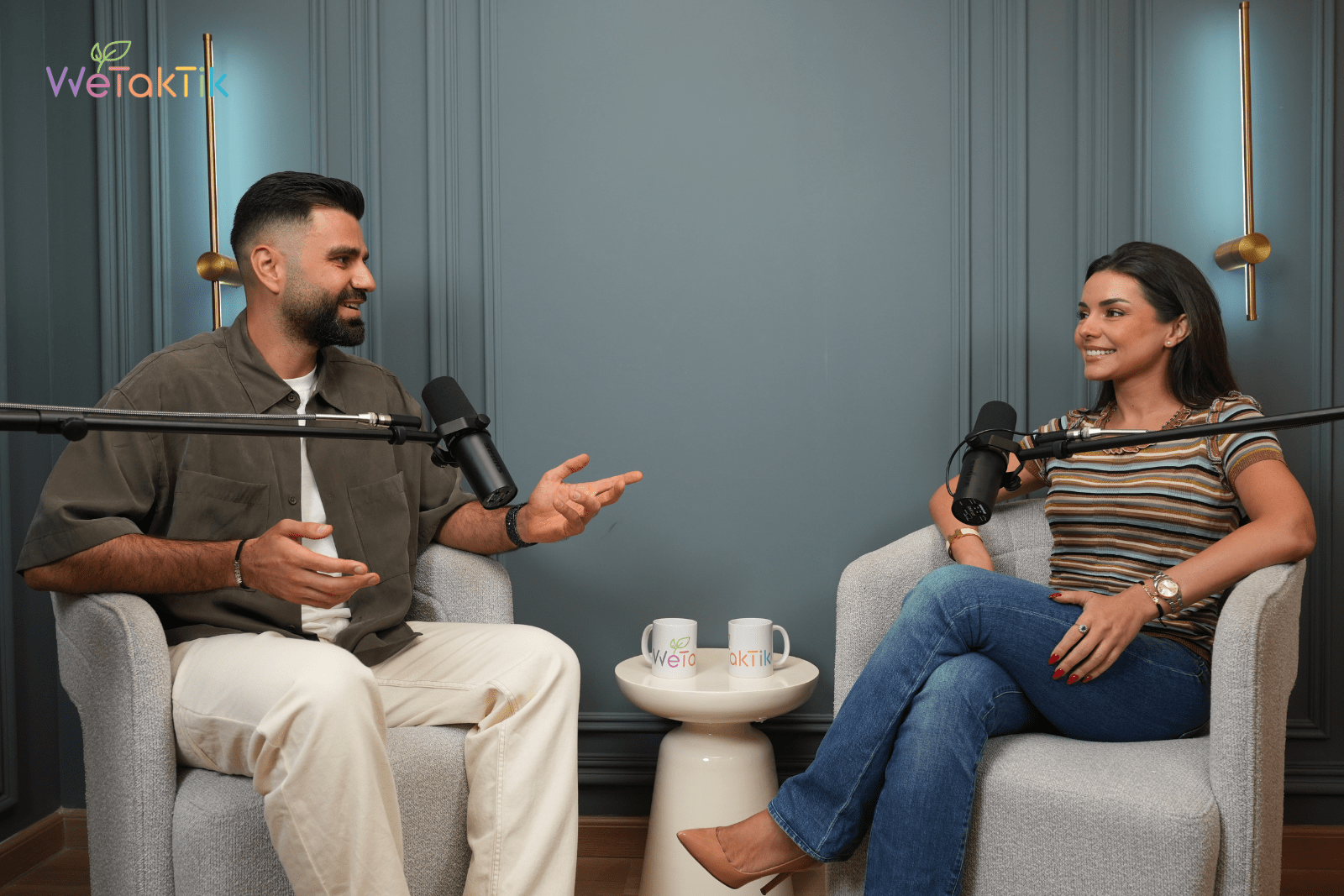

How do we create simple, effective Arabic content that shows up in AI results?

In an era where we ask AI tools about everything, the key question becomes: Where do these tools get their answers? And how can we influence those answers so the brand appears in the results, especially in Arabic?

The focus of this episode: how to create Arabic content that’s simple and effective… content that actually makes a difference. Opening question: Where should we start building content, on the website or on social media?

The house and the facade: where do we start?

A useful analogy: the website is the foundation (the house), and social media is the facade (the windows) we use to look out at the world. If the house is shaky, the facade won’t help.

For example, an airline’s social channels may showcase travel experiences, photos, and offers, but the real reference point is the website; bookings happen there, not on Instagram or TikTok.

What makes website content effective?

There are many factors, but four are fundamental:

  • Value: content that’s new, real, and genuinely useful.
  • Authenticity: a distinctive voice that represents the brand،not a copy of others.
  • Story: people engage with a narrative, not just with dry numbers.
  • Emotion: content that doesn’t touch feelings is quickly forgotten.

Add to that consistency: impact takes time, a plan, and a strategy, while continually maintaining quality.

For Arabic content specifically, the priority is that it be written by skilled native Arabic writers, not literal translations, and localized to the market and audience. A Gulf audience differs from an Egyptian or Maghrebi audience… these differences must be respected.

Practical examples of localization

Travel sector:

  • On the website: an article about the best European summer destinations, with internal links to the destination pages.
  • On social: a Reel summarizing the topic and driving traffic to the article.
  • In localization: add a paragraph about restaurants that serve halal food, because that’s culturally sensitive.

Fashion e-commerce:

  • On the website: an article on this winter’s/spring’s trends with direct links to relevant products.
  • On social: visual content promoting the idea with a link to the article.
  • In localization: use vocabulary that fits the audience; e.g., “kashkha” (smart/stylish) in the Gulf.

Whatever the examples, consistency remains the condition for becoming a trusted reference.

Why care about content in the age of AI?

AI feeds on website content. If a site is well-structured, useful, and strong on SEO, it will appear as a trusted source in AI answers; otherwise, you’re out of the game.

This isn’t limited to chat interfaces; even traditional search now blends in generated summaries that condense information from real sites. And when a user decides to take action (conversion), they visit the site that appeared in the answers or click the embedded links.

Bottom line: failing to invest now in content that shows up in these answers means losses both now and in the future. The right content has become a core success metric.

Practical steps for writing content in the AI era

  • Depth: since AI tools provide the short version, you provide the details. That differentiates you and lets tools extract clear value from your content.
  • Signature voice: your expertise and lived experience can’t be copied; show them clearly.
  • Simplicity and honesty: clear language that’s close to your audience.
  • Answer real questions: explore what people ask (in search engines and AI tools) and bake comprehensive, interactive answers into your content.

Debunking common beliefs about the Arab market

  • “The Arab market is small.” Not true. It’s growing and diverse, expanding day by day; ignoring it is a future loss.
  • “Translation is enough.” Translation conveys words but can lose authenticity and soul. Native Arabic writing conveys meaning and culture, bringing you closer to the audience.
  • “Arab audiences understand English.” True for a large segment, but at the moment of purchase or decision, people are more comfortable with Arabic content, which speeds up the decision.
  • “Multiple dialects are confusing.” Used smartly, they enhance credibility and closeness; that’s the essence of localization that respects regional differences.

Content is the foundation, social media is the facade, and AI is the amplifier.

Write Arabic content that is honest, fresh, and consistent. When your voice is clear, AI will remember you.

Podcast

Watch more Episodes

Ready to grow with intention and performance in mind

We design solutions that move you forward, and deliver measurable impact.