How to Optimize Your Content for Multimodal AI Search (Text, Image & Voice)

how to optimize for multimodal content in ai search

Search is no longer just about typing keywords into a box.

We now talk, snap, record, and point our cameras to find what we need. Welcome to the age of multimodal AI search, where text, image, and voice all play a role in discovery.

By 2025, major search engines like Google and Bing, along with AI systems such as ChatGPT and Gemini, will increasingly interpret queries across multiple input modes. That means users may ask a question by voice, show an image, or mix both, and expect a precise, conversational answer in return.

If your content speaks only one language (text), you’re already missing visibility opportunities.

What Is Multimodal AI Search?

Multimodal search combines different input types, like text, images, and voice, to help users find information faster.

For example:

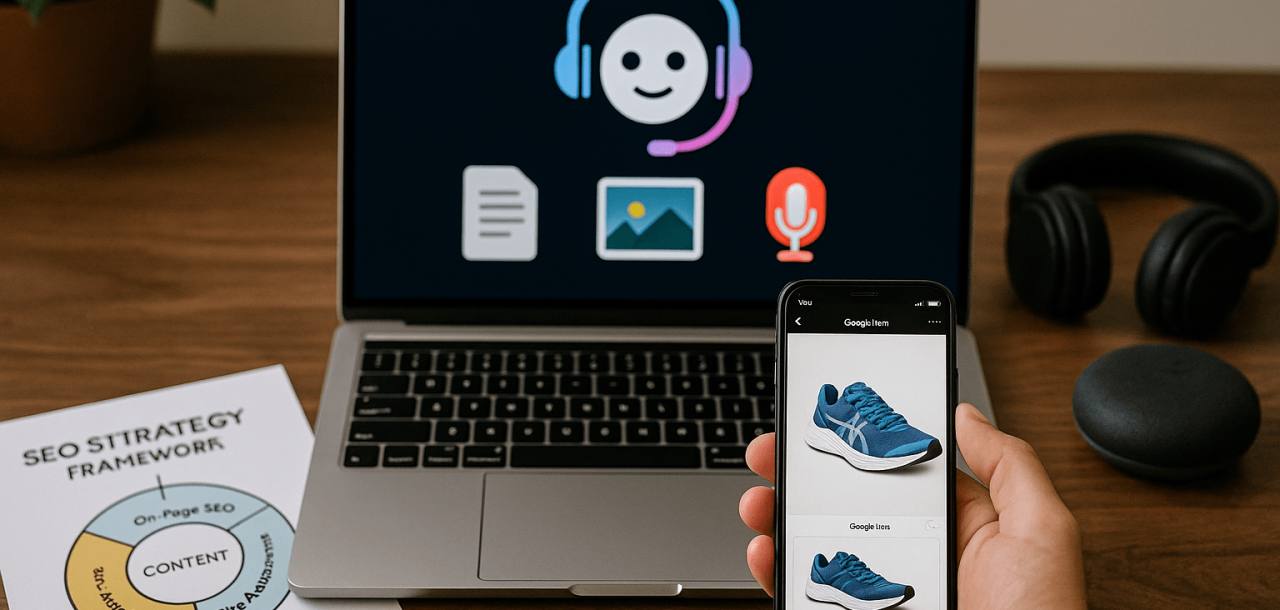
  • A user takes a photo of a product with Google Lens to find similar options online.
  • Someone asks Siri or Alexa for “the best coffee near me.”
  • A shopper uploads a picture of sneakers and says, “Find me these in white.”

AI now understands and connects these inputs.

For brands, this means your content must be understandable not only to people but also to machines that see, listen, and read.

Why It Matters for SEO

AI-powered search engines extract meaning from every signal they can: visuals, voice patterns, structured data, and on-page context.

Optimizing for multimodal search helps you:

  • Appear in AI Overviews, visual packs, and voice answers.
  • Improve accessibility and user experience.
  • Strengthen EEAT (Expertise, Experience, Authoritativeness, and Trust).
  • Future-proof your content against zero-click and AI-driven experiences.
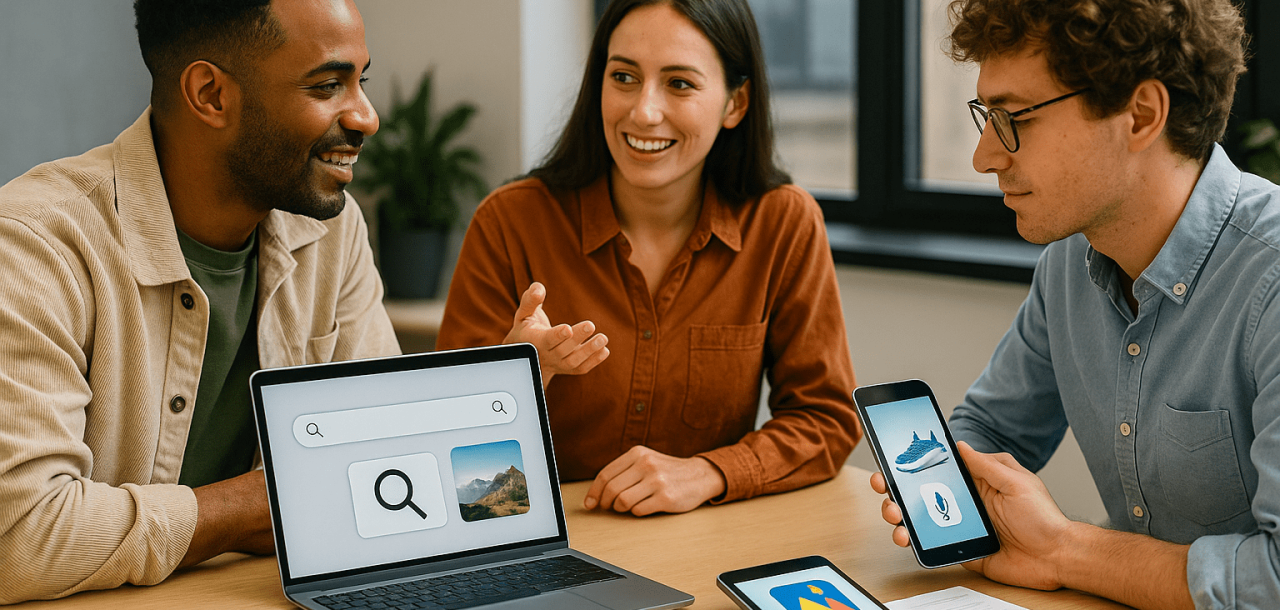
seo team working on optimizing images and voice search

1. Make Your Visual Content Searchable

Images are no longer decorative; they are searchable assets.

AI models analyze visuals to identify products, landmarks, and even emotions.

Optimization checklist:

  • Descriptive file names:

Use meaningful filenames that describe the content and context.

Example: seo-strategy-framework.png instead of IMG_0456.png.

  • Alt text:

Write concise, human-friendly descriptions that capture intent and relevance.

Example: “SEO strategy framework showing content and technical pillars.”

  • Image schema markup:

Use ImageObject or Product schema to help search engines understand visuals.

  • Context matters:

Place images near related text and ensure captions reinforce the topic.

  • Test your visuals:

Run them through Google Lens or reverse image search to see how Google interprets them.

2. Optimize for Voice Search

Voice queries are growing fast, especially on mobile and smart devices.

They’re typically longer, more conversational, and question-driven.

How to prepare your content for voice search:

  • Use natural language that mirrors how people speak.

Example: “What’s the best way to improve page speed?” instead of “page speed optimization tips.”

  • Add FAQ sections to answer commonly asked questions.

Example:

    • “How does schema markup help SEO?”
    • “What’s the fastest way to rank locally?”
  • Implement the FAQPage or Speakable schema so search engines can identify and read your answers aloud.
  • Focus on local and mobile SEO; many voice queries are location-based (e.g., “near me”).
  • Improve site speed and Core Web Vitals, voice search results often prioritize fast, mobile-friendly sites.

3. Don’t Forget Audio and Video Content

AI can’t fully “hear” or “see” yet; it relies on textual data to understand multimedia content.

That’s why captions, transcripts, and metadata are essential.

Best practices:

  • Add captions or subtitles to all your videos (YouTube, Reels, TikTok, etc.).
  • Upload full transcripts for podcasts and webinars.
  • Use VideoObject schema markup.
  • Include keyword-rich titles and descriptions for each video or audio file.
  • Provide contextual text around embedded media, intro paragraphs, summaries, and CTAs.

These steps help both users and AI tools understand what your content covers and why it matters.

4. Use Structured Data Across All Modalities

Structured data (schema markup) acts as a bridge between your content and AI systems.

It tells search engines exactly what’s on the page: text, image, video, FAQ, or review.

Essential schema types for multimodal SEO:

  • ImageObject: for visuals and infographics.
  • VideoObject: for videos and motion content.
  • FAQPage: for conversational and voice-driven queries.
  • Speakable: for audio playback on intelligent assistants.
  • Product or HowTo: for e-commerce or tutorial content.

You can test and validate the schema using Google’s Rich Results Test.

5. Audit and Measure Your Multimodal Readiness

Just like technical SEO, multimodal optimization requires regular auditing.

Quick audit steps:

  1. Review all image filenames, alt texts, and surrounding copy.
  2. Check your content’s performance in Google Search Console (especially image and video tabs).
  3. Look for “question” queries; these often reflect voice searches.
  4. Test how your visuals appear in Google Lens or Bing Visual Search.
  5. Validate schema markup and fix errors.
  6. Monitor Core Web Vitals for mobile responsiveness and loading time.

6. Pro Tip: Think Like AI

Ask yourself:

“If an AI assistant saw my page, would it know exactly what I offer?”

Run your content through tools like Google Bard (Gemini) or ChatGPT Browse, and see how they summarize your site.

If the answer doesn’t match your positioning, your multimodal signals need strengthening.

Key Takeaways

  • Multimodal search is already here, optimize for text, image, and voice together.
  • Use descriptive visuals, natural-language content, and structured data.
  • Transcripts, captions, and schema aren’t optional; they’re your way into AI search results.
  • Test your assets often and keep auditing as AI search evolves.

Blogs

Read more Blogs

Ready to grow with intention and performance in mind

We design solutions that move you forward, and deliver measurable impact.