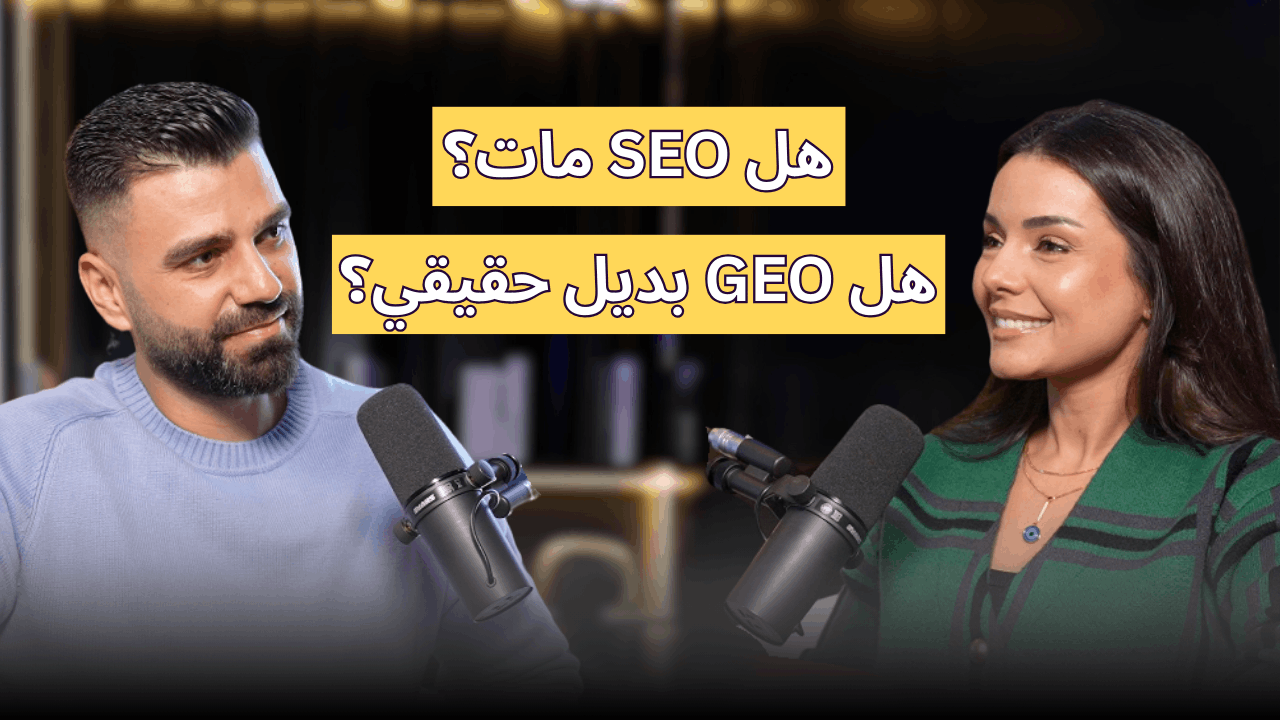

“Basma, in your opinion, is there really sensitivity between those who work in SEO and those who work in social media?”
“Yes, a lot.”
That tension is not imaginary. In many companies, teams enter meetings already carrying unspoken comparisons. The SEO team sees itself through the lens of visits, revenues, search visibility, and the long-term trust it builds through content. The social media team sees itself as the engine of views, engagement, and brand awareness, the reason people know and talk about the brand in the first place.
So whose argument is right?
Welcome to what we might call the “SEO Court,” where today’s case examines one of the most traditional battles in digital marketing: SEO vs. social media.
Who is more important?
Who delivers better results?
And who deserves the bigger share of the budget?
Some companies double down on SEO and almost ignore social media. Others do the opposite, believing that SEO is slow, technical, and, frankly, boring, while social media is fast, visible, and exciting.
But is there truly a conflict between these two channels, or is the real problem the way we think about them?
The comparison between SEO and social media is constant. Perhaps because:
But the shape of those numbers is very different.
In social media, we talk about:
In SEO, we talk about:
The metrics may look different, but both teams are pursuing growth. The tension begins when we misunderstand how each channel works.
One common criticism of SEO is that it is slow. And yes, SEO does not provide immediate signals. It doesn’t offer instant likes or visible engagement within minutes.
But that doesn’t mean it is ineffective.
SEO lacks early emotional indicators, not value. Social media delivers fast feedback, likes, comments, shares, and visible proof that something is happening. But speed does not always equal success. In fact, speed without substance can be risky.
Ask yourself:
Which channel keeps delivering results even if you stop posting for two weeks?
Most likely, SEO.
SEO is a channel that, once built properly, consistently brings traffic and results. The problem is not that SEO is slow; it’s that we confuse the absence of quick signals with the absence of value. If companies understood this distinction, they would be less impatient and less unfair in their judgment of SEO.
So which channel creates long-term brand impact?
The answer requires understanding the difference between them.
Social media builds:
It creates an emotional connection.
SEO builds:
Imagine this scenario:
You see a brand on Instagram or LinkedIn. Later, you encounter a problem and search for a solution on Google. You find that brand’s article addressing your issue. The brand name stays in your mind. Eventually, when you need their service, you search for them directly and become a customer.
What happened here?
Both channels worked together across the customer journey, from awareness to trust to conversion.
Neither SEO alone nor social media alone would have been enough.
Social media often receives faster recognition internally. Why?
SEO, on the other hand, works quietly in the background. Its results live in dashboards, spreadsheets, and analytics reports, often seen by only two or three people in the company.
So social media gets applause.
SEO is the quiet soldier, silent, but deeply effective.
Here’s another angle.
If engagement drops, who gets questioned first?
The social media manager.
If traffic drops, who gets questioned?
The SEO manager.
In both cases, the issue may not even be marketing-related. It could be:
Yet marketing channels are often held responsible for deeper business challenges.
This leads to a critical question:
Is the issue how SEO and social media work, or how we measure success?
If we measure:
Then we will inevitably face either inflated optimism or unnecessary frustration.
Surface indicators, visits, and followers matter. But they are not enough.
What truly matters is connecting each channel to growth:
Instead of asking who had the highest monthly numbers, we should ask:
Did both channels contribute to sustainable growth?
Rather than compete, these channels can integrate beautifully.
Social media can:
SEO can:
If you publish a strong SEO guide or case study on your website, you can extract short pieces from it and repurpose them into:
Those posts then drive traffic back to the website, completing the loop.
Same brand. Same voice. Same problems being solved, just expressed in different formats.
Through SEO, you address problems deeply.
Through social media, you address them quickly and lightly.
A monthly meeting between the SEO and social teams can change everything.
In that meeting:
They will discover something interesting:
Used together, this becomes a strategic advantage instead of a rivalry.
What if you are a small company?
Should you invest in SEO or social media first?
It depends.
Examples:
Start with SEO early. Capture existing demand.
Something people don’t yet know by name?
Social media helps introduce the idea and educate the market first.
Ultimately, the goal is this:
Presence across both reinforces trust.
From one perspective, social media is not just a branding channel. It is where people encounter your personality daily and build an emotional connection.
From the SEO perspective, SEO is not a luxury. It is a channel of clear intent, one that works continuously, builds lasting digital assets, and generates measurable revenue when done correctly.
SEO and social media are not enemies.
They are complementary forces.
The real shift happens when the question changes from:
“Who is stronger?”
to:
“How can these two channels work together toward the same goal?”
When that shift happens:
And the user benefits from a smoother, clearer journey.
So now we ask you:
Is one channel more important than the other?
If you think so, tell us why, and let’s continue the discussion.
Until the next case in the SEO Court, stay well.
Podcast
Ready to grow with intention and performance in mind
We design solutions that move you forward, and deliver measurable impact.