
For a long time, search was relatively simple.
You opened Google, typed what you wanted, got a list of links, and clicked through different websites until you found the answer you needed.
That is no longer the only search experience.
Today, we have:
Users can now get answers, comparisons, recommendations, and summaries before visiting a single website.
So how did we get here?
And what does this shift mean for SEO, AI search, businesses, and marketers?
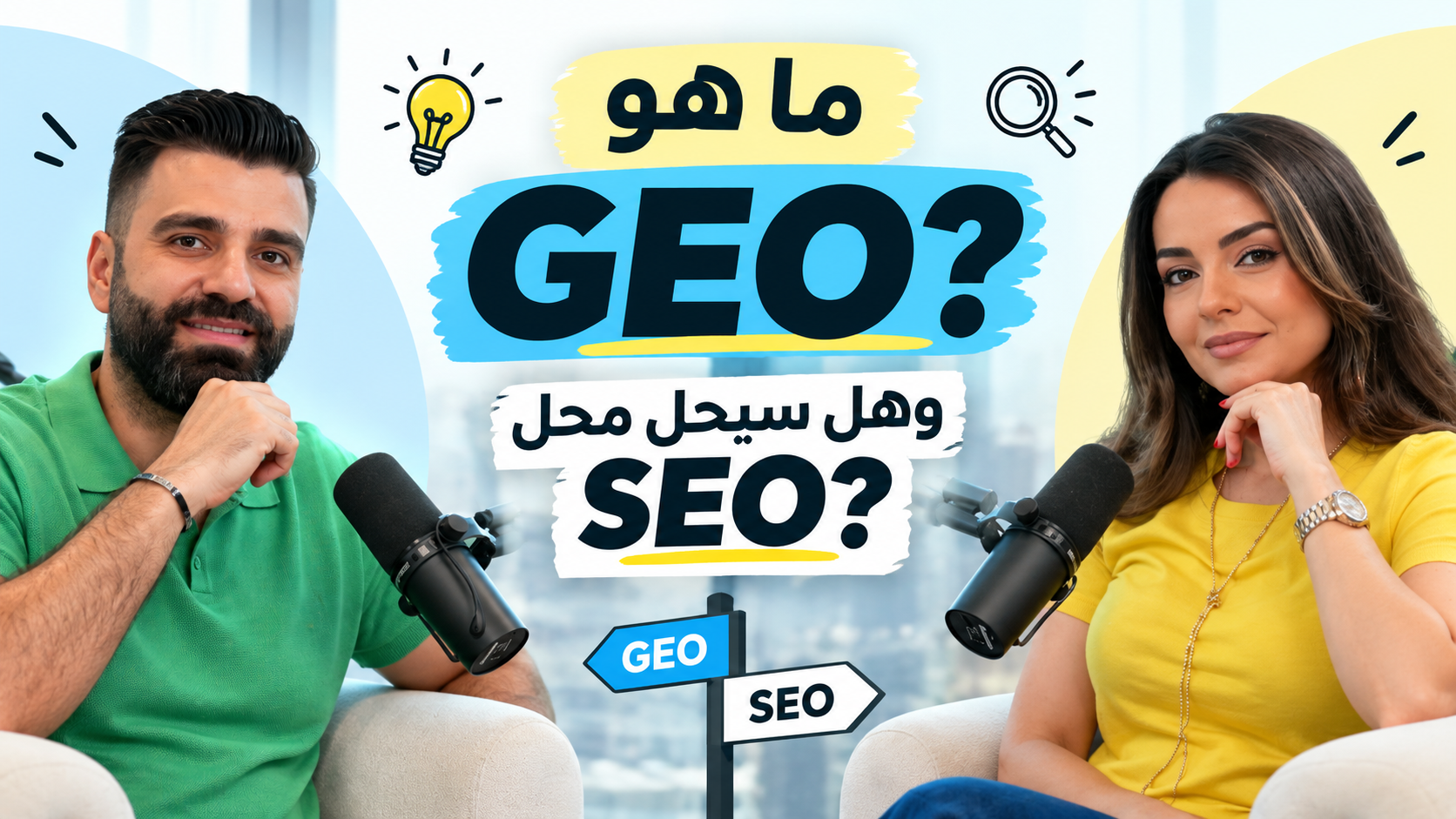
In an era where we ask AI tools about everything, the key question becomes: Where do these tools get their answers? And how can we influence those answers so the brand appears in the results, especially in Arabic?
The focus of this episode: how to create Arabic content that’s simple and effective… content that actually makes a difference. Opening question: Where should we start building content, on the website or on social media?
Traditional search was largely built around keywords.
A user had a need and tried to reduce it to a few words.
For example: Best gyms in Dubai
Google would then return a ranked list of results.
The user would:
The search engine helped the user find the information.
It did not necessarily give the complete answer directly.
That distinction matters because it started changing long before ChatGPT appeared.
Several years ago, Google had already begun trying to answer more questions directly on the search results page.
One example was Featured Snippets.
For certain searches, Google extracted a short answer from a webpage and displayed it directly in the results.
Instead of forcing the user to click immediately, Google could provide part of the answer first.
Another important development was the Knowledge Graph.
The Knowledge Graph changed the way Google understood entities such as:
Search was no longer purely about matching keywords to webpages.
Search engines were becoming better at understanding meaning, entities, and relationships.
This was an early sign that search was moving away from simply finding links and toward providing answers.
AI Overviews represent another major step in this evolution.
A Featured Snippet traditionally provided a short piece of information that was often closely associated with one webpage.
AI-generated answers can be much more complex.
They can combine information related to the user’s question and generate a more complete answer using multiple sources.
This means the user may receive a synthesized response before clicking any website.
And in 2026, Google also offers AI Mode, which introduces an even more conversational search experience.
Users can:
This matters because it shows AI search isn’t completely separate from traditional search.
Traditional search infrastructure, ranking systems, indexes, and SEO foundations continue to play a significant role in how information is discovered and surfaced.
The change is not only in the answers.
The way users search has also changed dramatically.
In traditional search, people learned to compress what they wanted into short keyword phrases.
For example:
Cheap CRM Dubai
Today, the same person might open ChatGPT or Claude and ask:
I have a company with 10 employees in the UAE. I need an affordable CRM that works well for a small sales team. What would you recommend?
That is a completely different search behavior.
The user is giving:
Search becomes a conversation.
This shift matters because users no longer need to translate their needs into search-engine language.
They can communicate naturally.
They may then continue with questions such as:
The search experience is no longer always one query followed by one results page.
It can become a dialogue.
The user asks. The AI answers. The user adds more information. The AI adjusts the response. The user compares. Then they ask for a recommendation.
This creates a much richer and more complex search journey.
Google is also no longer the only place where users discover information.
Platforms such as:
have increasingly become part of the discovery process.
These platforms can use web search and external sources to provide more current answers.
Depending on the platform and the query, they may also show or reference the sources used.
As a result, users now have multiple ways to discover information.
Search is becoming distributed across different platforms and experiences.
This is one of the most important changes for businesses.
Users no longer need to visit several websites before forming an opinion.
Imagine someone planning a family trip to Japan.
Instead of opening ten travel blogs, they may ask:
Build me a 10-day itinerary for Japan with children.
The AI system can gather information from different sources and create the itinerary directly.
Or imagine someone looking for a camera.
They may ask:
What are the best beginner cameras under $1,000?
The AI may provide a shortlist, explain the differences, discuss prices, and recommend certain models.
The user may eventually visit a website.
But by the time they do, they may already have:
The decision-making process starts before the first click.
If we summarize the shift, four major changes stand out.
Users no longer need to reduce their needs to short keyword phrases.
They can ask detailed, natural questions with context.
Traditional search focused heavily on providing links.
AI search can generate a direct answer before the user visits a website.
Traditional search results pointed users to individual webpages. AI systems can combine information from multiple sources to construct one answer.
Traditional search was often:
Search → Results → Click
Conversational search can become:
Ask → Answer → Clarify → Compare → Refine → Recommend
This changes how users interact with information.
No.
This is where we need to avoid exaggeration.
Traditional search is still extremely important.
People still use Google.
They still click links.
Traditional search results still matter.
Many AI-powered experiences also still rely heavily on search indexes, websites, and the same strong SEO foundations businesses have worked on for years.
Search has not disappeared.
It has expanded.
Today, a user may move between different types of search depending on what they need.
They may use:
To find websites, products, businesses, documentation, or specific information.
To receive a direct summary, comparison, recommendation, or explanation.
To continue asking follow-up questions and refine the answer.
These experiences can exist together.
The user chooses the one that best fits the question.
For businesses and marketers, search success can no longer mean only:
Are we ranking number one?
We also need to ask:
These questions are now part of the same search journey.
One of the biggest mistakes businesses can make is treating SEO and AI search as two completely separate worlds.
They are increasingly connected.
A customer may:
Traditional search and AI search may both influence the same customer.
That is why businesses need to think about one integrated search journey.
The rise of AI does not mean websites are disappearing.
Quite the opposite.
Websites remain a major source of information about:
AI systems need information to build answers.
Websites continue to play a central role in providing that information.
The difference is that users may now learn about your business through AI before visiting your website directly.
This has an important impact on measurement.
Companies should not assume the customer journey begins when someone arrives on the website.
It may begin much earlier.
Before the visit, the customer may already have:
So businesses need to understand not only what happens after the click, but also:
Businesses need to expand the way they think about search.
Traditional SEO still matters.
But it now needs to work alongside AI-search visibility.
That means asking questions such as:
Search visibility now needs to be considered across the whole journey.
The future is not simply traditional SEO.
And it is not simply AI search either.
The stronger approach is an integrated search strategy.
That means making sure the brand can be discovered across:
The goal is to be visible and useful wherever the customer chooses to search.
Search has been changing gradually for years.
The shift did not suddenly begin with ChatGPT.
Search engines were already moving from:
Finding links → Providing answers
Generative AI accelerated that change.
Today, users can ask longer questions, receive synthesized answers, compare options, get recommendations, and continue the conversation.
But websites, SEO, search indexes, and strong content are still central to the ecosystem.
The biggest change is that a customer can now discover you, learn about you, compare you, and consider you before ever visiting your website.
That means the way businesses optimize for search needs to evolve.
And the way we measure search success needs to evolve with it.
The future of search is not about choosing between SEO and AI search.
It is about understanding the full journey and building a strategy that works across both.
That was our topic for today.
If you have any questions, leave them in the comments.
See you in the next episode.
Podcast
Ready to grow with intention and performance in mind
We design solutions that move you forward, and deliver measurable impact.