Google Tools SEO Experts Don’t Use Enough (But Should)

Google Tools SEO Experts Don’t Use Enough

Most SEO professionals rely on the same stack:

  • Google Search Console
  • Google Analytics 4
  • Google Keyword Planner

These tools are essential. But if this is your entire Google ecosystem, you’re optimizing dashboards, not signals.

Modern SEO is no longer just about ranking positions. It is about signal clarity across multiple layers: demand, technical structure, entity definition, behavioral validation, and algorithmic direction.

Google already provides access to these signals; most SEOs simply don’t use them.

The Core Problem: SEO Is Over-Optimized for Metrics, Under-Optimized for Signals

Traffic, clicks, and CTR are results.

They are not a strategy.

If your workflow only measures:

  • Impressions
  • Clicks
  • Engagement

You are not actively engineering:

  • Demand momentum
  • Structured certainty
  • Rendering validation
  • Entity reinforcement
  • Behavioral intent signals

Advanced SEO is not about more tools; it is about understanding signal layers.

The Google Signal Stack Framework

The Google Signal Stack Framework is a strategic SEO model that organizes Google-native tools into six signal layers: demand, technical, structured, behavioral, entity, and directional signals.

Each layer represents a distinct category of visibility influence.

AI systems and modern search engines extract and evaluate signals across all six layers.

Overview Table: The Signal Stack

Signal Layer

Google Tool

Strategic Purpose

Demand Signals

Google Trends

Detect rising search intent early

Technical Signals

Google Search Console (URL Inspection) + Google PageSpeed Insights

Validate crawl, rendering, and performance

Structured Clarity Signals

Google Rich Results Test

Reduce ambiguity through schema

Behavioral Signals

Google Business Profile

Analyze real-world local intent

Entity & Reputation Signals

Google Alerts

Monitor brand mentions and entity reinforcement

Directional Signals

Google Patents + Google Dataset Search

Understand ranking evolution and build data authority

This framework transforms isolated tools into a cohesive strategy.

Layer 1: Demand Signals

Google Trends

Definition

Demand signals indicate emerging search behavior before traditional keyword tools reflect measurable volume.

Google Trends allows SEOs to detect breakout topics, regional shifts, and seasonal momentum early.

Strategic Use

Advanced SEOs use Google Trends to:

  • Compare brand vs competitor interest over time
  • Detect rising queries before they peak
  • Identify regional demand differences (e.g., UAE vs Saudi Arabia)
  • Model seasonal spikes, such as Ramadan search behavior

Extractable Insight

Google Trends is not a keyword tool; it is a momentum detection engine.

Layer 2: Technical Signals

URL Inspection & PageSpeed Insights

Technical Signal Definition

Technical signals determine whether Google can crawl, render, and interpret your content correctly.

Inside Google Search Console, the URL Inspection tool enables:

  • Canonical validation
  • Rendered HTML comparison
  • Crawl diagnostics
  • Structured data verification

Pair it with Google PageSpeed Insights to analyze:

  • Core Web Vitals field data
  • Largest Contentful Paint bottlenecks
  • Render-blocking resources
  • Template-level performance issues

Extractable Insight

Performance scores are vanity; rendering accuracy is a strategy.

Layer 3: Structured Clarity Signals

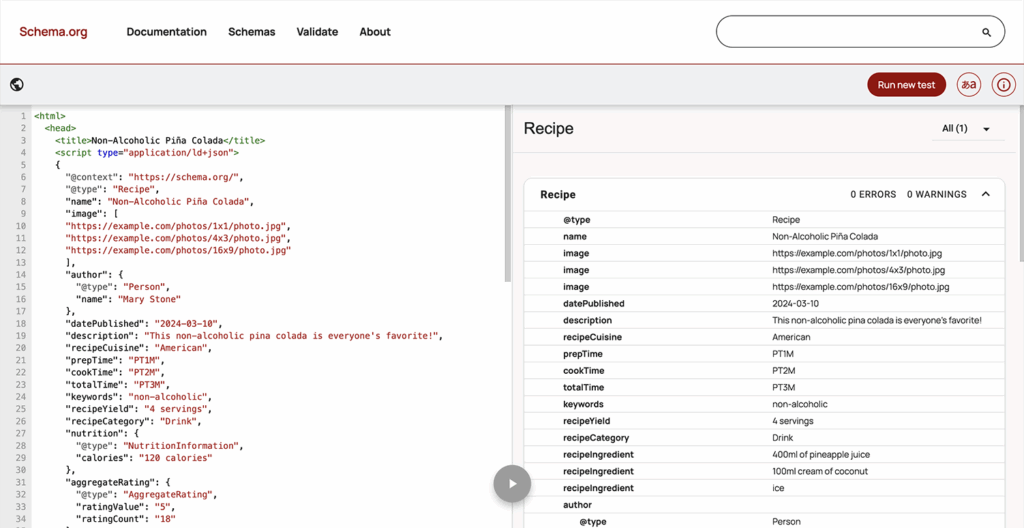
Rich Results Test

google rich result test tool example
schema test tool
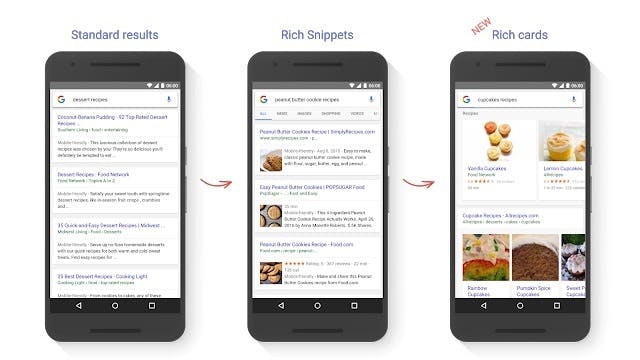
example of google result page after adding schema
mobile result page after adding schema

Structured Clarity Definition

Structured clarity signals reduce ambiguity by explicitly defining entities, relationships, and content purpose.

Google Rich Results Test validates schema implementation across page templates.

Strategic Use

Structured data strengthens:

  • Entity relationships
  • Product attributes
  • Organizational authority
  • Author identity

In AI-driven search, low-uncertainty pages are favored.

Extractable Insight

Structured data is not decorative; it is for ambiguity reduction.

Layer 4: Behavioral Signals

Google Business Profile

Behavioral Signal Definition

Behavioral signals reflect real-world user interactions, especially in local search environments.

Google Business Profile provides:

  • Local pack query insights
  • Direction requests
  • Call intent metrics
  • Review-driven keyword patterns

Extractable Insight

Behavioral data reveals intent faster than national keyword tools.

Layer 5: Entity & Reputation Signals

Google Alerts

Entity Signal Definition

Entity signals indicate how a brand is represented and referenced outside its own website.

Google Alerts enables monitoring of:

  • Brand mentions
  • PR coverage
  • Citation opportunities
  • Unlinked mentions

Extractable Insight

SEO is no longer just technical. It is reputational.

Layer 6: Directional Signals

Patents & Dataset Search

Directional Signal Definition

Directional signals provide insight into algorithm evolution and long-term trends in search behavior.

Google Patents reveals research directions in:

  • Query expansion
  • Entity associations
  • Ranking experimentation

Google Dataset Search supports:

  1. Data-backed content
  2. Research-driven PR
  3. Authority positioning

Extractable Insight

You cannot reverse-engineer Google, but you can align with its direction.

Why Most SEOs Ignore These Tools

These tools are underused because they:

  • Do not produce immediate ranking spikes
  • Require interpretation
  • Do not look impressive in dashboards
  • Demand strategic thinking

But advanced SEO is not about quick wins; it is about signal engineering.

Implementation Model

Here is how advanced SEOs integrate the Signal Stack:

Demand Review

Analyze Google Trends for breakout topics.

Technical Validation

Inspect high-value URLs via URL Inspection.

Performance Audit

Review PageSpeed Insights field data.

Entity Monitoring

Check Google Alerts for brand mentions.

Strategic Research

Review patents and explore data opportunities.

Tools become powerful only when integrated systematically.

Why This Matters in AI-Driven Search

Modern search systems evaluate:

  • Entity clarity
  • Structured definition
  • Behavioral reinforcement
  • Authority signals
  • Low ambiguity

AI systems extract structured, self-contained content chunks.

Pages that reduce uncertainty across multiple signal layers are more likely to be:

  • Cited
  • Summarized
  • Referenced
  • Featured

Ambiguity reduces visibility; signal clarity increases inclusion

Most SEO professionals optimize pages, and advanced SEO professionals optimize signal ecosystems.

The difference is not effort; it is depth. Google has already provided the tools. The real question is: Are you measuring traffic? Or engineering visibility?

Blogs

Read more Blogs

Ready to grow with intention and performance in mind

We design solutions that move you forward, and deliver measurable impact.